BYTECO SYSTEMS ENGINEERING

ENGINEERING SOFTWARE
RUST AND CORROSION
PRESSURE TESTING AND PLANT MAINTENANCE 
PUMPS AND VALVES SUPPLY 

ENGINEERING SOFTWARE

1

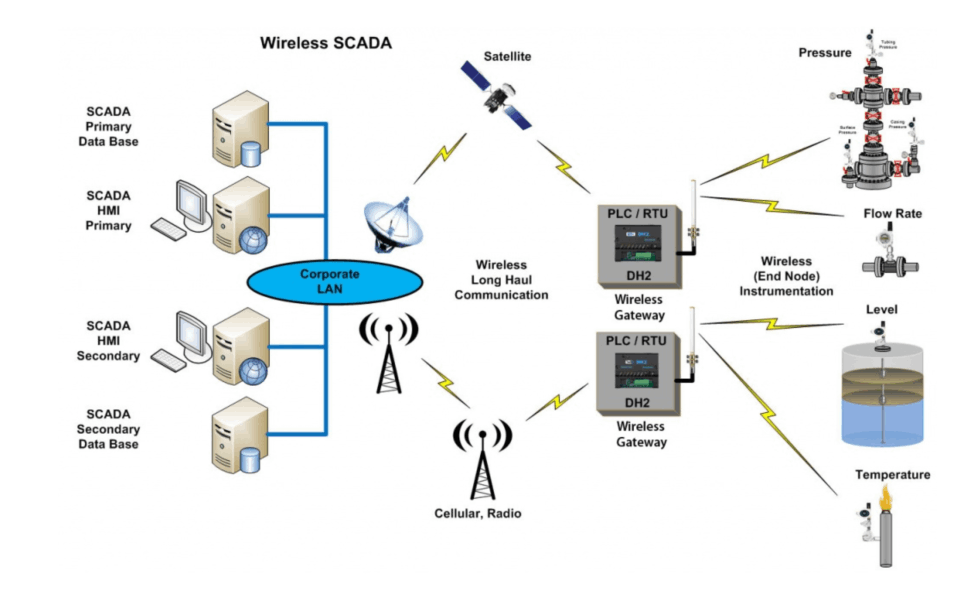
SCADA SYSTEMS DESIGN, CABLING, STATISTICAL DESIGN SOFTWARE  

Supervisory control and data acquisition (SCADA) is a control system architecture comprising computers, networked data communications and graphical user interfaces (GUI) for high-level process supervisory management, while also comprising other peripheral devices like programmable logic controllers (PLC) and discrete proportional-integral-derivative (PID) controllers to interface with process plant or machinery. The use of SCADA has been considered also for management and operations of project-driven-process in construction.

2

SERVICE OF PROCESS INSTRUMENTS 

The purpose of intrument calibration is to eliminate or reduce disproportionate weight in favour in an instrument's reading over a range for all continuous values.

3

CALIBRATION OF INSTRUMENTS 


Ovens / Incubators
Incubators (Humidity & Temperature)
Verniers, Micrometres & related dimensional equipment
Torque tools
Pressure gauges
Lux meters, Oscilloscope, Insulation meters, Power supplies and any Electrical testing equipment
Mapping/Validation of warehouses/cold rooms
Hygrometers, Thermometers, Data loggers etc.
Balances: Analytical, Scales, Calibration weights
Sound level meters, heat stress monitors
Fume Cupboards 

RUST AND CORROSION PROTECTION 

Rust is a form of iron oxide. It occurs when iron combines with the oxygen in the air causing it to corrode. Rust is the orange-brown discoloration that builds up on metal. Rust can affect iron and its alloys, including steel. Whenever you have iron, water and oxygen together, you get rust. The main catalyst for rust to occur is water. Although iron and steel structures seem solid to the eye, water molecules are able to penetrate microscopic gaps in the metal. This starts the process of corrosion. If salt is present, for example in seawater, the corrosion will be more rapid. Exposure to sulfur dioxide and carbon dioxide will also hasten the corrosive process.

Rust causes the metal to expand, which can place great stress on the structure as a whole. At the same time, the metal will be weakened and become brittle and flaky. Rust is permeable to air and water, so the metal beneath the rust layer will continue to corrode.

1. Galvanizing
Galvanizing is a method of rust prevention. This is accomplished through hot-dip galvanizing or electroplating. The iron or steel object is coated in a thin layer of zinc. This stops oxygen and water reaching the metal underneath but the zinc also acts as a sacrificial metal. Zinc is more reactive than iron, so it oxidizes in preference to the iron object.

2. Corten or Weathering Steel
Use a weathering steel, also known as “COR-TEN” steel which contains up to 21% of alloying elements such as chromium, copper, nickel and phosphorous. The alloys form a protective rust patina which reduces the corrosion rate with time. COR TEN steel tends to be cheaper than stainless steel.

3. Stainless Steel
Rust resistant alloys. Stainless steel is an alloy and contains a minimum of 11% chromium. This allows the formation of a protective film of chromium oxide which acts as a shield against rust. The protective film will re-form if damaged. Corrosion resistance can be further enhanced with the addition of nickel.

4. Proper Pre-Design
The design should allow air to freely circulate around the metal. Proper planning during the design stage can minimize water penetration and reduce the risk of rust. Crevices and cavities should be avoided. Metal joints should be welded not bolted. If appropriate, drainage holes for water should be considered. For large structures, adequate access should be enabled to allow for regular maintenance.

5. Bluing
Bluing is immersing the steel parts into a solution of potassium nitrate, water and sodium hydroxide and is a useful technique which offers limited protection for small steel items against rust. The reason it is called “bluing” is because of the blue-black appearance of the finish when using this technique. It is often used in manufacturing firearms to provide a degree of corrosion resistance. It’s also used in fine clocks and other metal work.

6. Regular maintenance
If you build in regular maintenance it will help to stop rust forming and halt the progress of any rust that occurred. It’s crucial to remove any rust that has formed. A razor blade can be used for small areas. Using warm water and soap, surface grime should be removed. Then, a rust resistant coating should be applied to the surface.

7. FOZZ
FOZZ is a balanced blend of Phosphoric Acid and other chemicals, wetting agents and extenders which dissolve rust and prevents further rusting. Properly treated surfaces are ready to paint when dry. FOZZ is not a paint, but a primer which conditions metal so that paint will adhere.

8. Powder coating
Powder coating is when a dry powder is evenly applied to a clean surface. Then, the object is heated, turning the powder into a thin film. Acrylic, polyester, nylon, vinyl, epoxy and urethane powders are available. Powders are applied using an electrostatic spray process. The electrically conductive object is sprayed with a charged, non-conducting powder.

9. Organic coating
A cost effective way to protect against rust is using an organic coating which form a barrier against corrosive elements. Oil based coatings are ideal for preventing penetration of water and oxygen.
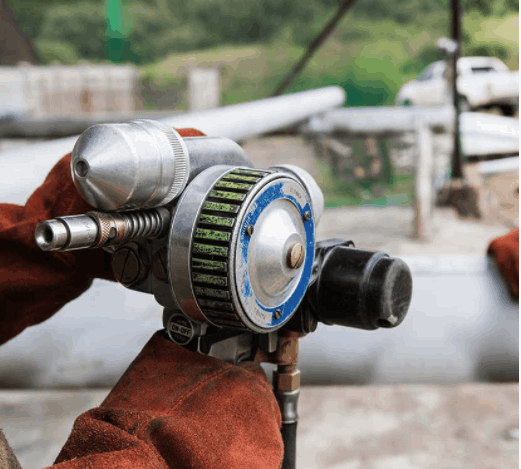
The importance of corrosion protection cannot be overstated. In the last decade it was estimated that corrosion would cost the South African economy over R160- billion. Half of every ton of steel that is produced, is produced merely to replace corroded steel

This implies a significant carbon footprint, as 380 kg of carbon dioxide (CO2) is produced for every ton of steel produced.

The World Corrosion Organisation (WCO) estimates that total annual losses from corrosion problems amount to over $1.5 trillion word-wide.

Studies in different countries indicate that between 25% to 30% of water supply is lost in the supply chain due to corrosion.

The effects of corrosion are well documented, including economical loss, waste of energy and materials, environmental impact and safety. Fact is that corrosion not only causes structural and environmental damage but also threatens public health and safety.

Our solution also includes concrete protection (along with steel protection systems). In addition, We provid “wear-resistant coatings – such as rubber linings – often used when material is transported on conveyers.

This serves as added protection from corrosion and impact damage.

Mobirise

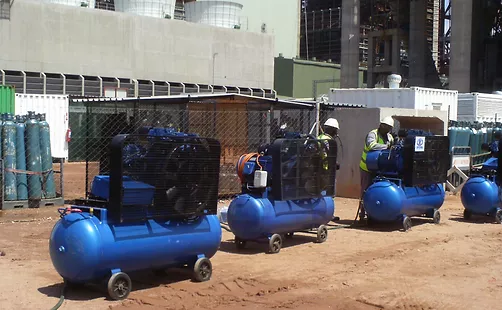
PRESSURE TESTING AND PLANT MAINTENANCE 

Services 

Hydrostatic Testing 
Pneumatic Testing 
Ultrasonic thickness testing
Visual examinations, internal and external

We also conduct site visits if preferred

1

There are 2 pressure tests performed :Pressure Leak Test and Pressure Strength Test - commonly known as Hydrostatic Test. 

2

Objectives :Fired and Unfired pressure vessels are under government regulation, their objectives are to prevent: accidents that could cause undue risk to the personnel working at or near the plant equipment, 

3

Definition: Design Pressure; The pressure used in the design of a vessel. It is manufacturer recommended design pressure on each equipment. 

4

Maximum Allowable Working Pressure (MAWP) : It is the internal pressure at which the weakest element of the vessel is loaded to the ultimate permissible point, when the vessel is assumed to be :- corroded condition under the effect of a designed temperature in normal operating condition under the effect of other loading, like wind, external pressure, etc. 

5

Pressure Leak Test (1.10 x MAWP) :1. Pressure Leak Test (1.10 x MAWP) : The purpose is to detect leaking paths through the "pressure envelope" in either direction. The methods used may be straightforward using water or gas, like air or inner search gases. Leakage detection may be visual or measurement of pressure drop, pressure vacuum decay rate, trace gas or water respond to detection instrument.

6

Hydrostatic Test (1.50 x MAWP) :2. Hydrostatic Test (1.50 x MAWP): Is the statutory requirement of pressure vessel in order to verify and demonstrate the continued fitness for services.              

7

Also hydrostatic test is conducted after all fabrication work has been completed. During the testing process temporary gasket may be used Hydrostatic Test Pressure = 1.5 (MAWP) (stress value at test temp.F) (stress value at design temp.F) # NOTE : All hydrostatic Test shall be witnessed by Inspector. However, the Senior Inspector may approve the following person to witness the mentioned test during off-hours.       

8

PRESSURE TEST cont :-PRESSURE TEST cont :- 2. Hydrostatic Test (1.50 x MAWP) cont :2. Hydrostatic Test (1.50 x MAWP) 

9

PRESSURE TEST cont :-PRESSURE TEST cont :- Hydrostatic Test Procedure on PipesThe steps below are typical procedures while other may have added requirements :- 1 Bolts together the 2 pipes. 2 Connect the elbow casting simplifies the end of the pipelines. The fitting of the elbow casting simplifies the process of filling the pipeline with water. 3 Bolt a flange fitted with a shut off cock to the other end of the pipe. 4 Close the shut off cock and fill the pipeline with water until the water start to flow through the elbow. 5 Bolt a flange with a pressure gauge connection to the elbow casting 6 Connect the test pump to the shut off cock   


PLANT MAINTENANCE

Plant maintenance is defined as a set of activities that are necessary to keep machinery, parts & types of equipment in good operating conditions to avoid production stoppage and loss.

 What happens if plant is not maintained.

a. Loss in production time.

b. Rescheduling of production.

c. Spoilt materials (because sudden stoppage of process damages in-process materials).

d. Failure to recover overheads (because of loss in production hours).

Types of Plant Maintenance: 

(a) Corrective or Breakdown Maintenance
(b) Scheduled Maintenance
(c) Preventive Maintenance
(d) Predictive Maintenance

 PUMPS AND VALVES SUPPLY

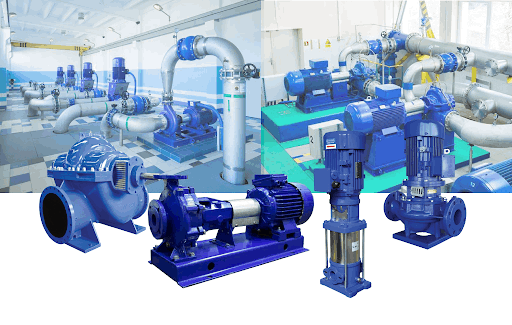
Pumps play a fundamental role in all types of buildings, since they simplify the movement of fluid substances. Most pumps in residential and commercial locations handle water, and they have applications in many building systems: fire pumps provide a pressurized water supply for firefighters and automatic sprinklers, booster pumps deliver potable water to upper floors in high-rise constructions, and hydronic pumps are important in HVAC systems that deliver heating and cooling with water. 

There is a large variety of pump designs, but most types can be classified into centrifugal pumps and positive displacement pumps. This article provides an overview of each type and compares performance features.

1

Centrifugal Pumps


Centrifugal pumps use an impeller, which has curved blades that accelerate fluids towards their edge when rotating. 

Based on the flow they produce, centrifugal pumps can be classified into three subtypes. The flow pattern is determined by both the impeller shape and the pump’s construction.

2

Positive Displacement Pumps

Positive displacement pumps move a fixed amount of fluid at regular intervals. They are built with internal cavities that fill up at the suction side, to be discharged with higher pressure at the outlet. 

Comparison Between Centrifugal and Positive Displacement Pumps

Although both pump types move fluids in a specified direction, accelerating a fluid is not the same as displacing it in discrete amounts. 
OPERATING CONDITIONS
CENTRIFUGAL PUMP
POSITIVE DISPLACEMENT PUMP

Effect of system pressure
Flow is reduced when system pressure increases.
Constant flow. If system pressure increases, the pump produces more pressure as well.
Effect of viscosity
Higher fluid viscosity reduces flow rate. Pumping efficiency drops as viscosity increases.
Higher fluid viscosity increases flow rate.

Conclusion

Pumps are among the most used devices in modern society, performing various functions in residential, commercial and industrial locations. As a result, a wide range of pump designs has been developed. However, variety can also lead to confusion, and using the wrong pump type for an application can cause energy waste or equipment damage.

To make sure all your building systems use the correct pump types, the best recommendation is working with qualified design professionals. This also allows you to integrate VFDs and other control features during the design phase, saving thousands of dollars in power bills over time.

Mobirise

PUMPS 

Pumps can be classified by their method of displacement into positive-displacement pumps, impulse pumps, velocity pumps, gravity pumps, steam pumps and valveless pumps. There are three basic types of pumps: positive-displacement, centrifugal and axial-flow pumps.  
The pumps are available in general purpose bareshaft or heavy duty bracketed configurations and can be supplied with internal relief valves to prevent damage to the pump or system.

Materials of construction include cast iron, bronze, steel and stainless steel. Bushes are also available in carbon graphite and tungsten carbon, dependent on application.

Mobirise


VALVES 

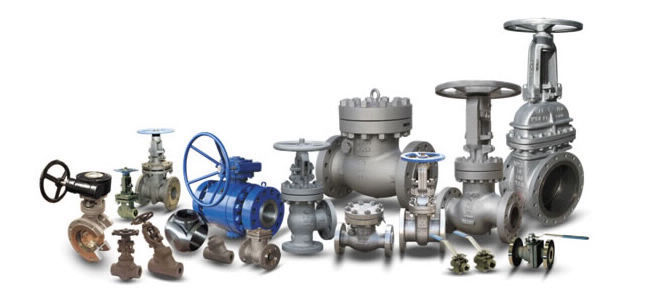
Gate, Globe, Check, Plug, Knife gate valves: In Cast (API600), Forged (API602) or DIN in standard or special construction like: High Pressure Seal, Cryogenic, Bellows Seal, Jacketed, Extended bonnet, Valv-O-Let, . .
Ball valves: Floating or Trunnion mounted and Double Block and Bleed.
High Performance Butterfly valves: Resilient, Centric, Double and Triple eccentric. – Wafer, lugged or flanged.
Diaphragm valves
Control Valves: Linear or Rotating actuated.
Instrumentation valves, Double Block and Bleed, High pressure Needle and Ball valves, Manifolds.
Actuation: Manual, Pneumatic, Electric and Hydraulic actuated.
Additional items like:

Y-T-Strainers – Steam traps – Safety Valves – Sight Glasses – Solenoid valves – Compensators – Flame and Detonation Arresters and other related products as well when help is needed.

Made with Mobirise ‌

Free Web Site Design Software